Monday, November 18, 2024

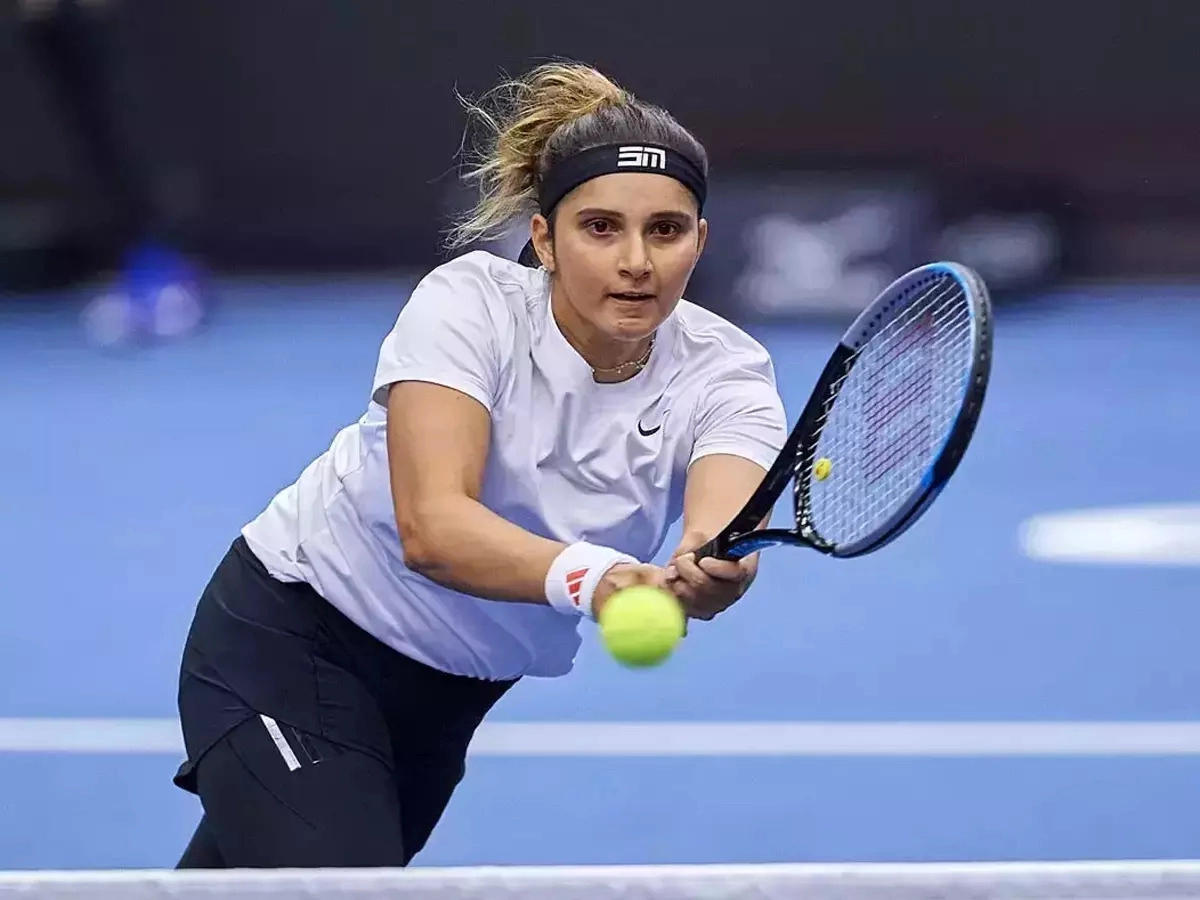
Sania Mirza, A Tennis Journey from India to Global Success

Sania Mirza, A Tennis Journey from India to Global Success

Introduction


Sania Mirza , Having been born in India on November 15, 1986, she rose to the top of the doubles world rankings and claimed six major championships. From 2003 to 2013, when she peaked at world No. 27, she was the best singles player in India. Due to an injury to her wrist, she turned her attention to doubles, where she won 43 titles until retiring in February 2023. Having won 14 gold at major events, Mirza made almost $7.2 million. She was the UN Women Goodwill Ambassador for South Asia and was recognized as one of Time's "50 Heroes of Asia".

Early life


Sania Mirza was born in Mumbai on November 15, 1986, to Imran, a sports journalist from Hyderabad, and Naseema, a printing company employee. Soon after her birth, her family relocated to Hyderabad, where she grew up in a devout Sunni Muslim household alongside her sister Anam, who is married to cricket player Muhammad Asaduddin. The cricket captains Asif Iqbal and Ghulam Ahmed are distantly related to her. At six years old, Mirza began playing tennis under the guidance of Roger Anderson and her father. In 2008, the Dr. M.G.R. Educational and Research Institute awarded her an honorary Doctor of Letters. She attended Nasr School and St. Mary's College in Hyderabad.

Tennis career


Success on the ITF Junior Circuit
Sania Mirza, who was trained by her father, started playing tennis at the age of six and went professional in 2003. She won thirteen doubles titles and ten singles championships as a junior, including the Wimbledon girls' doubles in 2003 with Alisa Kleybanova. She made her senior circuit debut at the age of fifteen in April 2001 on the ITF Circuit. Highlights included winning three titles in 2002, including the gold medal from the National Games of India, and making it to the semifinals in both New Delhi and Pune in 2001. She competed in her first WTA event in 2003 at the Hyderabad Open. At the 2002 Asian Games, she won a bronze medal in mixed doubles, and at the 2003 Afro-Asian Games, she won four gold medals.
Success in WTA Tour and Grand Slam tournaments
Sania Mirza, the eventual champion Nicole Pratt, defeated her in three sets at the Hyderabad Open after entering as a wildcard. At the same tournament, she and Liezel Huber won their first WTA doubles championship. In 2004, Mirza won six ITF singles championships. She won the Hyderabad Open WTA championship in 2005, making history as the first Indian woman to do it. She advanced to the Wimbledon second round, the Australian Open third round, and the Dubai quarterfinals. For her accomplishments, Mirza was named WTA Newcomer of the Year and advanced to the US Open's fourth round as well as the Japan Open semifinals.
Top 30 singles breakthrough
Sania Mirza won three medals in the Asian Games in Doha in 2006, making history as the first Indian woman to be seeded in a Grand Slam event. She achieved her career-high singles ranking of world No. 27 the following year. In 2007, Mirza put up impressive displays, making it to the US Open third round, the Hobart semifinals, and the Bangalore quarterfinals. She also advanced to the quarterfinals of the US Open in the women's and mixed doubles divisions and won four doubles championships. https://www.allyourchoice.co.in/sports/sania-mirza-a-tennis-journey-from-india-to-global-success/

Thursday, November 23, 2017

Indian Polity 5th Edition

http://www.bookshd.com/wp-content/uploads/2017/11/9a4f59bccfd2.jpg
McGraw Hill is proud to present the fifth edition of Indian Polity by M Laxmikanth. The book itself needs no introduction. It is one of the most popular and comprehensive books on the subject and has been a consistent bestseller for many years. It has become a must-read book for aspirants appearing in various competitive examinations, especially the civil services examinations. The wide range and scope of issues that it covers also makes it valuable to postgraduates, research scholars, academics and general readers who are interested in the country’s political, civil and constitutional issues. This new, fifth edition, has seven new chapters added, along with four new appendices. The extant chapters have been completely revised and updated with recent developments.
Read More

General Knowledge 2018

http://www.bookshd.com/wp-content/uploads/2017/11/9d8b67e15b02.jpg

The candidates aspiring to appear for various competitive and recruitment examinations like SSC, Bank Clerk and PO, Railway Recruitment, etc. should have sound knowledge of varied sections covered under the subject of General Knowledge.

General Knowledge 2018 provides a comprehensive study of all the sections that are covered under the subject of General Knowledge. The book has been divided into seven sections namely Current Affairs, Indian History, Geography, Indian Polity, Indian Economy, General Science and General Knowledge each containing detailed theoretical content. Figures, Graphics and Tables have been given along with the theory wherever required. Important Notes and Tables are provided under the highlighted box for the revision of important points. The ‘Current Affairs’ section in the beginning of the book contains coverage of latest news and events that happened in the recent year. History section covers Ancient India, Medieval India, Modern India, Art and Culture and World History, whereas the Geography section covers world geography, Indian geography and Environment and Ecology. The Indian Economy section covers Indian Economy, Broad Sectors of Indian Economy, National Income of India, Planning of India, India’s New Economic Policy, Macro-Economic Problems in India, Agriculture, Industry, Indian Financial System, Insurance, Demography and Glossary whereas the Indian Polity section covers Constitution of India, Preamble, Union and Its Territory, Citizenship, Fundamental Rights, Prime Minister, President, etc. The General Science section covers basics of Computer apart from Physics, Chemistry and Biology. The General Knowledge section covers First in World, Superlatives World, Geographical Epithets, UNESCO World Heritage Sites in India, United Nations, Principle Languages of India, Indian Defense, Space Programme of India, National Awards, etc. This book will prove to be highly successful for SSC, Railway, Bank (PO and Clerk), Army, Air force, Navy and various other competitive and recruitment examinations.

As the book contains ample collection of general knowledge and general science along with updated Current Affairs, it for sure will help aspirants score high in the general aptitude section asked in various recruitment examinations.
Read More

Diary of a Wimpy Kid: The Getaway (book 12)

http://www.bookshd.com/wp-content/uploads/2017/11/633e8b2838e5.jpg
Get ready, Book 12 in the phenomenally bestselling Diary of a Wimpy Kid series is coming! Join Greg on a family holiday he'll never forget!
To escape the stress of the holidays, the Heffleys decide to get out of town and go to a resort instead of celebrating Christmas at home. But what's billed as a stress-free vacation becomes a holiday nightmare.
The funniest books you'll EVER read.

Praise for Jeff Kinney:
'The world has gone crazy for Jeff Kinney's Diary of a Wimpy Kid' - Sun
'Kinney is right up there with J K Rowling as one of the bestselling children's authors on the planet' - Independent
'The most hotly anticipated children's book of the year is here - Diary of a Wimpy Kid' - Big Issue
'Hilarious' - Telegraph.
Read More

Thursday, August 17, 2017

Deep Thinking: Where Machine Intelligence Ends and Human Creativity Begins

http://www.bookshd.com/wp-content/uploads/2017/08/9a337e5f9d78.jpg
Book : In May 1997, the world watched as Garry Kasparov, the greatest chess player in the world, was defeated for the first time by the IBM supercomputer Deep Blue. It was a watershed moment in the history of technology: machine intelligence had arrived at the point where it could best human intellect. It wasn't a coincidence that Kasparov became the symbol of man's fight against the machines. Chess has long been the fulcrum in development of machine intelligence; the hoax automaton 'The Turk' in the 18th century and Alan Turing's first chess program in 1952 were two early examples of the quest for machines to think like humans - a talent we measured by their ability to beat their creators at chess. As the pre-eminent chess master of the 80s and 90s, it was Kasparov's blessing and his curse to play against each generation's strongest computer champions, contributing to their development and advancing the field. In this breakthrough book, Kasparov tells his side of the story of Deep Blue for the first time - what it was like to strategize against an implacable, untiring opponent. But more than that, he tells his story of AI more generally and how he's evolved to embrace it, taking part in an urgent debate with philosophers worried about human values, programmers creating self-learning neural networks and engineers of cutting edge robotics
Read More